
The Gigantic Ramp of Masada

Masada Ramp
Image Source: Wikipedia

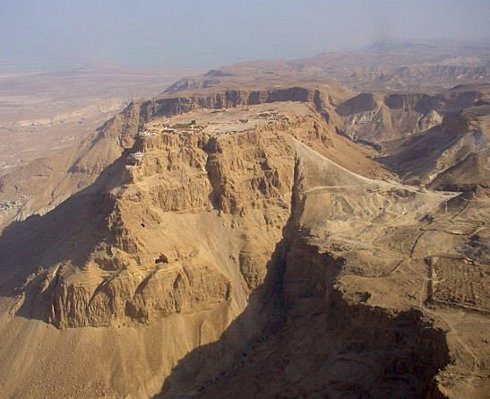
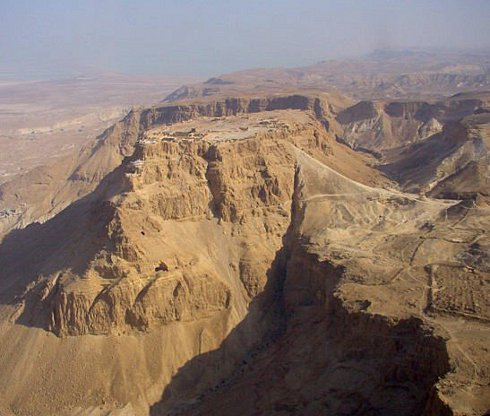
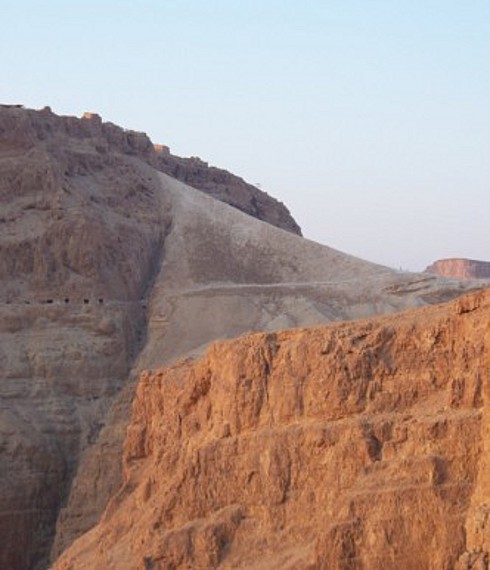
Should you ever visit the South District of Israel, make sure you take a trip to the amazing site of Masada — once a Jewish stronghold that sits atop an enormous isolated plateau of rock in the Judean Desert that was once only surmountable by way of an enormous 375ft high ramp, built by the army of Roman governor Lucius Flavius Silva in the year 73.
Masada Ramp 2
Image Source: Pennina Neumann

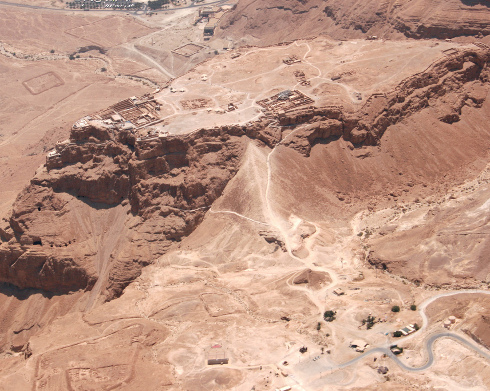
The ramp was built with one objective in mind: to offer Silva’s army an entrance point into the fortress, practically unreachable any other way due to its location approximately 1000ft above the mainland.
Masada Ramp 3
Image Source: Laboratory for CAD & Lifecycle Engineering

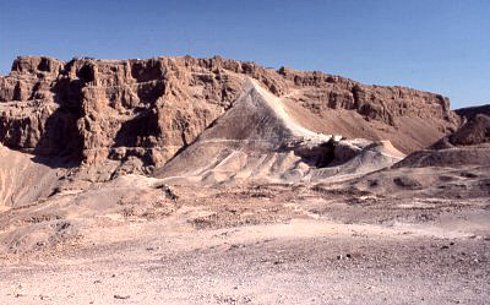
Silva preceded the ramp’s construction by orchestrating the erection of a seven mile wall around the plateau, built in order to trap any potential escapees once the fortress walls had been overcome.
Masada Ramp 4
Image Source: S. Alan Moore

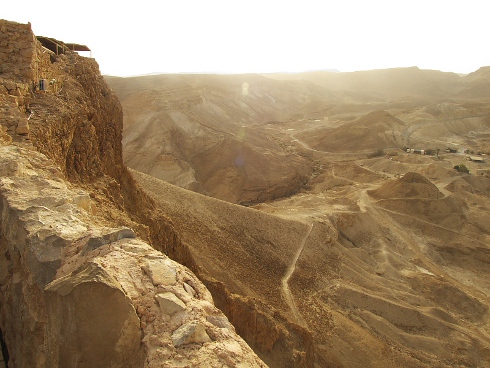
Then came the ramp. Over the course of the next few months, Silva’s 4/5000-strong army transferred and compacted many thousands of tons of rock and earth, and slowly built what would become an enormous inclined walkway that reached the fortress walls.
Masada Ramp 5
Image Source: James Brink

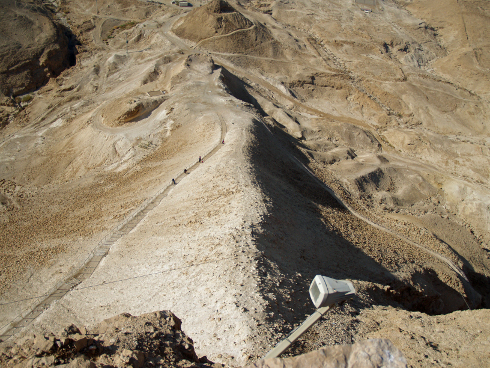
On April 17th of 73, with the ramp in place, a giant battering ram was pushed to the top of the 100ft high ramp. In no time at all, Silva’s men gained access to the fortress and readied themselves for resistance from the 900+ Jewish inhabitants of Masada.
Masada Ramp 6
Image Source: Wikipedia

However, on entrance to the stronghold, all that awaited Silva were the lifeless bodies of approximately 960 Sicarri rebels. Days previous, upon hearing of the ramp’s construction, they had taken their own lives in a mass suicide.

The ramp of Masana still stands today.

Comments
  • This is a fascinating pictorial. Silva’s conquest was actually the fulfillment of a biblical prophesy. The “edomites” had repeated over the generations “stabbed” Israel in the back making their raids and retreating to their fortress. One of the prophets said (Ezekial 25:13) that for their behavior they would cease to exist.

  • Tony D.:

    The Romans had big gonads in those days; and lots of patience. They even compacted the earth. We still do that today. Now if only our government would show some gonads.

  • moshe kaplan:

    I do not wish to seem irreverent, nor appear a smartass. Nevertheless, my question remains the same one I posed 30 years ago.

    Seeing tank carriers roll northward en masse and not knowing the date Lebanon 1 would begin, I opted out of visiting Masada that day. Protecting kibbutznikim from fedayyeen infiltrators from Jenin, was more important than a field trip. I stayed behind to complete work on our miklatim com-systems.

    In a dumbed-down world, hopefully this is still asked:

    “If nobody could reach Masada until the Romans legions built their ramp, how did its Jewish defenders reach it?”

    On Wings of Eagles? Other than Ezekiel (perhaps) people presumably did not envision F15′s, nor Arkia, nor El Al.

  • karmon:

    There was a book written and a movie made about Masada. My then husband had read the book and when my children and I sat down to watch the movie on TV, he neglected to tell us the end result. Needless to say my children spent several years in therapy.

  • Barry:

    During our visit there, we were told that the Romans used Jewish slaves to build the ramp, and that it was hard for the Macabees to defend themselves by killing their brethren as they did their work dumping dirt in place.

    Any truth to that?

    The excavation on top of Masada revealed luxurious facilities for Rome’s elite to get away from Jerusalem. (It was fairly close to the capitol.)

  • Phil Haberkorn in Indiana:

    A little-known fact about this structure is that it is the result of a seemingly innocuous remark by one of the Roman General’s soldiers.
    Solder: “Sir, is there anything we can do to ramp up our efforts to get to the top of that mountain?”
    General: “Ramp? Did you say ramp? Hold that thought!”
    +
    Imagine if Lucius Flavius had to lobby for funding for this project in the Roman Senate, and it got bogged down in committee over cries of a “BRIDGE TO NOWHERE…..”
    +
    I think this is a great example of how ancient antiquities can be converted to modern use to promote tourism. That thing looks like a kick-butt motocross course, or maybe they could add downhill roller skiing to the summer Olympics!
    +

  • Scott G.:

    Adds new meaning to the words: “Well, back in the Spring of 73…”

Leave a Comment